The quarterly target did not clock in
A restaurant can have a detailed business plan while the employee arriving for a four-hour shift has little idea what success should look like today. The target exists somewhere. It has not yet become a useful instruction for the person doing the work.
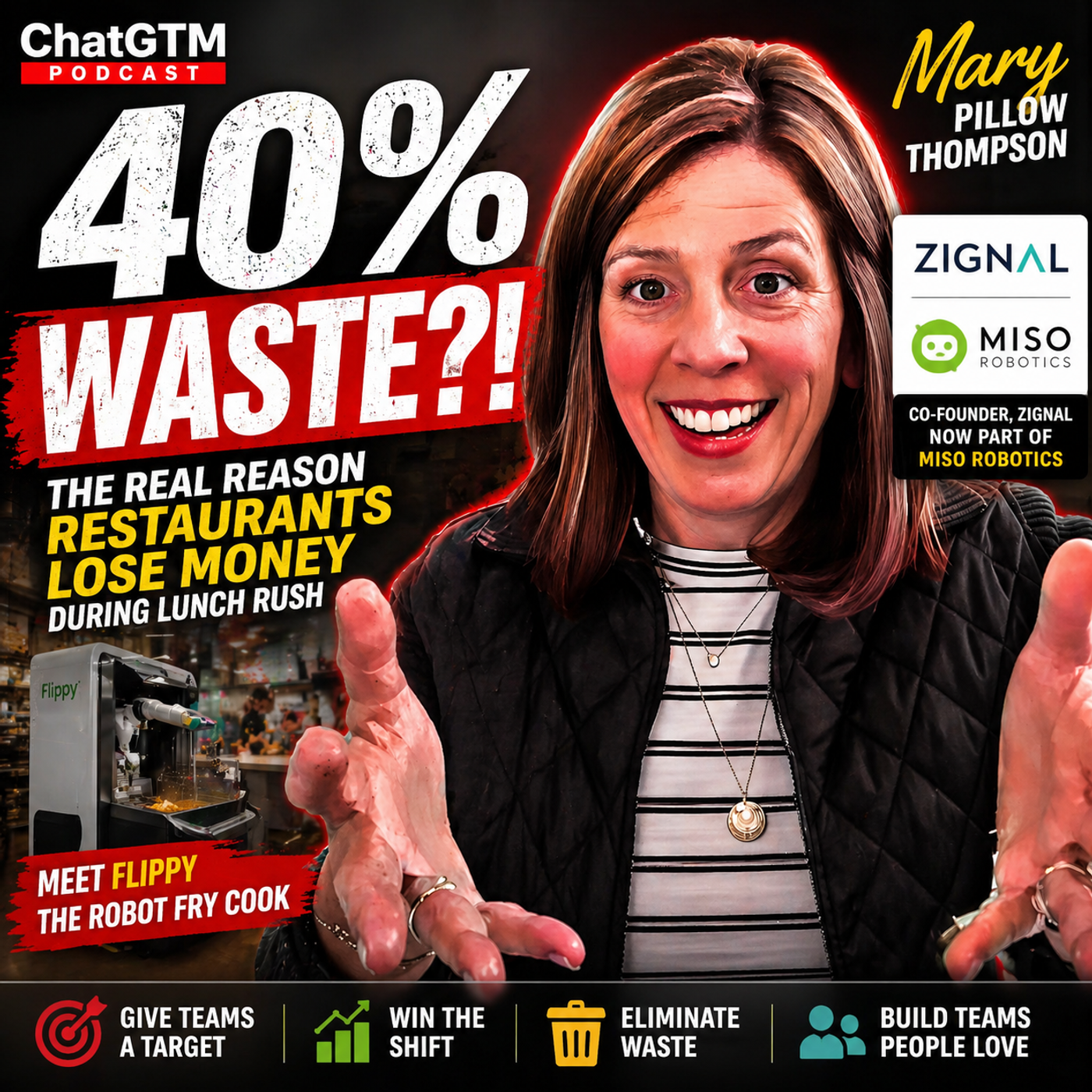
Mary Pillow Thompson makes that gap the starting point of her ChatGTM conversation with Michael Beck and Chad Horn. Discussing Zignyl and its place within Miso Robotics, she describes translating broader operating goals into something a frontline team can understand during a shift.
Her challenge is simple enough to try without buying anything: ask several employees what it means to win that day's shift. If their answers describe different objectives, the business has a coordination problem before it has a technology problem.
Give the goal a working definition
Thompson discusses targets such as shift sales and drive-through time, along with giving employees visibility into progress. The shared goal matters because it connects individual tasks to a team outcome. People can see what they are working toward together.
The operator still has to choose the goal carefully. A sales target does not explain which behaviors help achieve it, and a speed target needs to coexist with accuracy and food quality. Make the desired actions clear enough that employees can respond without guessing which standard they are allowed to sacrifice.
Thompson notes that a whiteboard or spreadsheet can be a starting point. The value lies in the clarity and feedback, not the sophistication of the display. A manager should be able to explain what the team is aiming for, how progress will be measured and what support is available when the shift gets difficult.
Then review the outcome with the team. A missed target can reveal a bad assumption about demand, staffing or the process itself. Treating every miss as a motivation problem would waste the information the shared goal was meant to produce.
The same sales total can hide a different kitchen
Thompson describes forecasting at the product and hour level, rather than relying only on a daily revenue number. Two periods can produce the same sales total through different mixes of products. The work required in the kitchen may be very different.
Her fry-station example makes the issue tangible. An employee may be preparing food without seeing the full demand picture, then have to choose between making too much and falling behind. Short holding times make that uncertainty consequential.
The lesson is to identify which information would change a specific decision. A better forecast should help someone prepare the right work at the right time. More data on a screen does not help much if the employee cannot tell what to do differently because of it.
Before introducing a new tool, Thompson recommends examining the current numbers and the reasoning behind operating choices. Observe first. A useful baseline makes it possible to distinguish an improvement from a confident explanation of something nobody measured.
Buy automation for the task it can actually do
The conversation also covers Flippy and the relationship between software and kitchen equipment. Thompson describes automation taking responsibility for a defined task so employees can devote attention elsewhere, including noticing what a guest needs.
She is also explicit about product boundaries. A restaurant's preparation methods and brand standards need to match what a piece of equipment can handle. Her discussion of frozen versus freshly prepared products illustrates why a general enthusiasm for robotics is not enough to establish fit.
Operators should therefore evaluate the actual menu, space and workflow. What enters the station? Who supplies it? What happens downstream? How will cleaning, maintenance and exceptions be handled? The equipment occupies a place inside a working kitchen, not a separate demonstration area.
Thompson also rejects the assumption that software or automation removes the need for human involvement. The team still needs to understand the process and exercise judgment. A new tool should make responsibilities clearer, rather than create an impressive object nobody quite owns.
Use one shift to learn something specific
Thompson describes beginning with observation, then choosing a particular shift to improve through changes in scheduling or goal setting. That creates a manageable unit of work. The team can compare what it expected with what actually happened.
Choose a shift, document its starting conditions and decide what the experiment is meant to answer. Keep the review close enough to the work that employees can explain the exceptions. Expand only after the improvement makes operational sense.
A restaurant's strategy becomes real through repeated shifts. The people on those shifts deserve a clear account of what matters, the information to respond and the authority to do their jobs well. Before adding another system, make sure they are all trying to win the same game.