Wendy's had a reason to sound like Wendy's
The memorable part of Wendy's social presence was the banter. The less visible part was the work that gave the banter somewhere to belong. Brandon Rhoten describes going back to the brand's history of challenging the industry, then finding a contemporary way to express it.
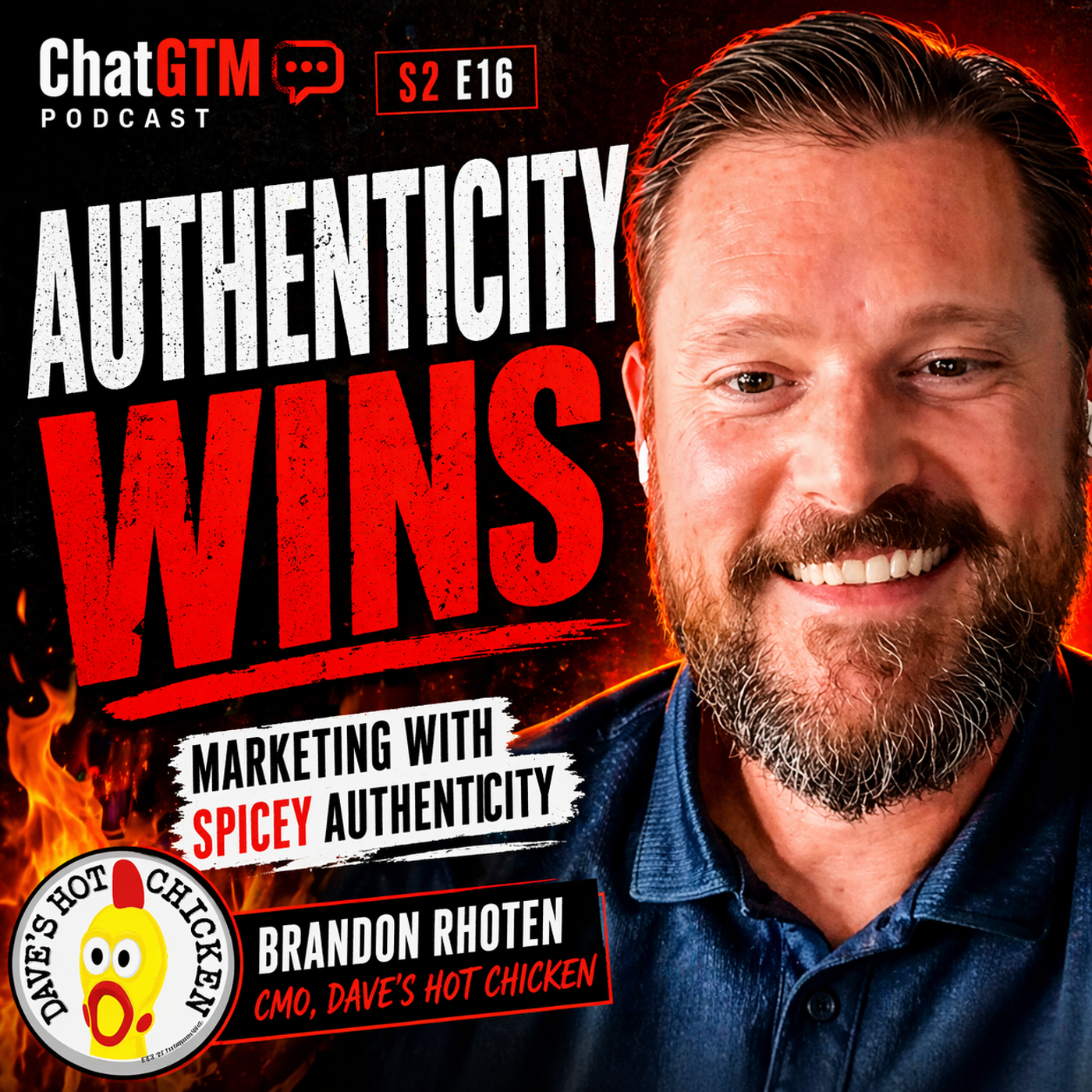
In his ChatGTM conversation with Michael Beck and Chad Horn, Rhoten connects that earlier experience with his work at Dave's Hot Chicken. He does not arrive with a universal prescription that every restaurant should be funnier. He begins by studying what the particular brand means to customers and what actually brings them in.
That changes the creative assignment. The team is not trying to develop the most entertaining personality in the category. It is trying to express a recognizable business in a way that people care about, without losing the connection between the attention and the restaurant.
Listen for the behavior already happening
Rhoten describes Dave's as a brand that often reflects what its fans are doing and saying. He pays attention to how customers engage with the food, including its spice levels, and looks for ideas that extend that relationship.
He discusses product testing and fan response before a wider launch. The creative work gives people a reason to participate, while the audience helps reveal which parts of the experience travel naturally. That is different from assuming any popular online trend belongs in the brand's calendar.
His account of the Fallout collaboration illustrates the same filter. A specific cultural connection can make sense for the audience even if it is not the broadest available entertainment property. The decision rests on fit, not simply the size of the potential audience.
For a marketing team, the useful exercise is to collect examples of what customers voluntarily do with the brand. What do they photograph, explain to friends or return to discuss? Those observations can produce a better brief than a request to make the next campaign go viral.
An inexpensive impression can still do nothing
Rhoten is pointed about the difference between media efficiency and business impact. He does not argue for wasting money. He argues that a low cost per impression is not enough to establish that a campaign helped the franchisee whose dollars funded it.
He describes using paid media in relation to organic momentum, including supporting an idea as its initial attention begins to fade. The timing is part of the judgment. Spending should serve the opportunity rather than run independently because a calendar already says it is time.
That suggests a more useful campaign review. Explain the behavior the work was intended to produce, examine the resulting traffic and commercial evidence, and be clear about what cannot be attributed confidently. Reach can help describe exposure. It cannot, by itself, answer whether the business became healthier.
Rhoten also focuses on existing restaurants while the brand expands. New openings attract attention, but the current franchise community needs continuing reasons to believe the business is worth investing in. The marketing job does not end when the next location cuts a ribbon.
Do not make the restaurant harder to use
The conversation moves from campaigns into ordering and operations. Rhoten wants the guest experience to stay straightforward. He describes the frustration of a technology interaction taking too much effort and the risk of letting that moment undermine the food and environment the brand has worked to create.
He also discusses simplifying the early experience at a new restaurant so the team can learn to execute well. Newness creates its own complexity. Adding every possible product and channel immediately can make it harder for guests and employees to understand the core experience.
For another brand, the lesson is to include the visit in the marketing review. Follow the path from the campaign through the menu and purchase. If the promise is energetic and inviting but ordering feels like administrative work, the guest encounters the contradiction directly.
Build judgment that works when the boss leaves the room
Rhoten describes regular team sessions examining strong advertising and asking what worked, whether it fit the brand and whether it supported the business. He sees that work as a way to develop judgment, rather than rely on a leader's personal taste in every meeting.
His advice to younger marketers is to do the homework that supports an idea. Understand the past results, the customer and the positioning well enough to explain why the proposal deserves budget. Instinct becomes more useful when it has been trained by evidence.
The payoff is a team capable of making consistent choices without waiting for the CMO to approve every thought. A distinctive brand needs that shared understanding as it grows. Otherwise, each new campaign becomes another audition for a personality the business has never quite agreed it owns.