A failed payment does not respect your org chart
A payment fails during service. The guest is waiting. The manager needs a working terminal. Somewhere beyond the counter, several companies may be preparing persuasive explanations of why their particular component is innocent. None of those explanations completes the transaction.
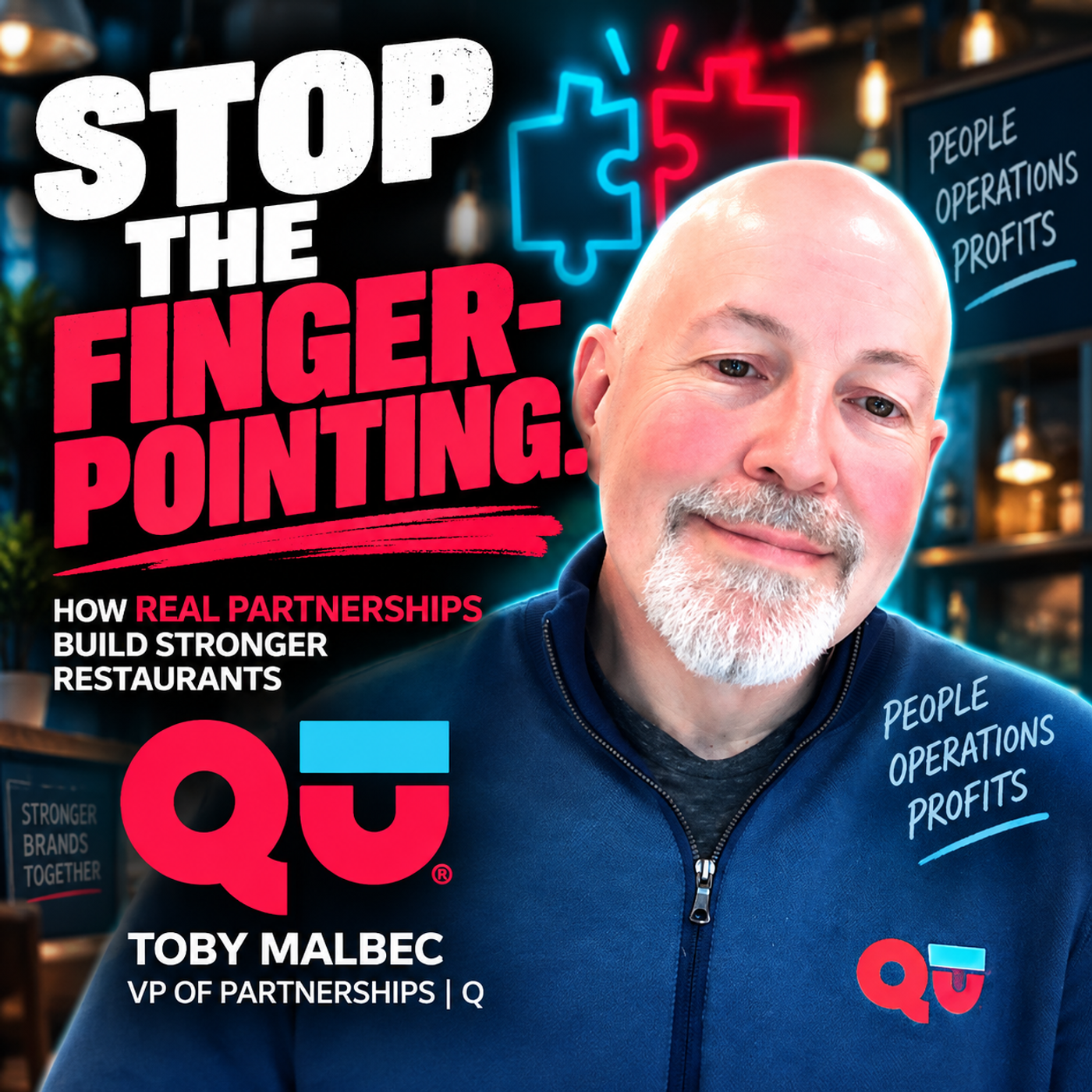
That gap between a vendor's responsibility and a restaurant's experience sits at the center of Toby Malbec's ChatGTM conversation. Speaking as Qu's vice president of partnerships, he draws on years spent working with operators, including Subway and Church's Texas Chicken. He has seen technology from both sides of the buying decision, and his standard remains the person trying to run the restaurant.
An operator may not know where the point-of-sale system ends and a payment gateway, loyalty platform or internet connection begins. Malbec argues that suppliers need to resolve those boundaries together. A technical problem becomes everybody's problem when the combined service stops working.
An integration is the beginning of the relationship
Malbec distinguishes an integration from a working partnership. Two products can exchange data while the organizations behind them remain poor collaborators. Product changes can break something downstream. Support teams can disagree. The operator can still be left coordinating the repair.
His proposed approach begins with shared customers and the people willing to make a deeper commitment. A loyalty company understands loyalty in ways a point-of-sale provider may not. A digital menu board company brings different knowledge of how the guest encounters the menu. Joint development can put that expertise to work instead of stopping at the minimum connection required to complete a sale.
He describes asking prospective partners for resources, participation and shared ownership. Enthusiasm is pleasant, but the relationship needs people who will show up when there is actual work to do. The practical test arrives after the introductions, when someone must commit engineering time or help solve an uncomfortable support issue.
Malbec is also clear that parts of this approach were still aspirational at the time of the conversation. He describes progress and an intended direction, rather than claiming every partner already operates this way. That distinction matters when judging any partnership program: ask what is live, what is being tested and what remains a promise.
Give the operator one useful conversation
Separate vendor reviews can each report acceptable service while the restaurant continues to struggle. Malbec suggests bringing a small group of partners to the operator together and asking how they can improve the experience. Meeting a service-level agreement is a baseline. It does not settle whether the combined system makes the manager's job easier.
Consider a recurring problem with an offer that displays correctly on a menu but fails at checkout. A joint review could follow the offer from creation through display, purchase and reporting. Each supplier would see the whole journey and agree who owns the next action. This is an application of Malbec's approach, not a case study he claims in the episode.
The commercial logic is straightforward. A recurring-revenue business needs customers to keep finding value in the relationship. Malbec sees ongoing contact with operators as a way to learn what is changing and adjust accordingly. A partner program that only produces announcements misses that source of information.
Evaluate the partnership as carefully as the product
For smaller companies seeking an integration, Malbec recommends bringing a real operator need into the discussion. A common customer gives the request context. A clear value proposition helps explain why the work deserves attention. Company size alone is not his deciding factor.
He also cautions against making every short-term opportunity the basis of a new relationship. Repeated growth requires repeatable processes and partners who can work together over time. That does not eliminate commercial tradeoffs. It does require a longer view than whichever deal happens to be closest to signing.
His comments on requests for proposals follow the same reasoning. The requirements should reflect the customer's actual operation. A thick response full of irrelevant capabilities creates reading work without necessarily improving the decision. Alongside product fit, the buyer should examine how suppliers answer operational questions, handle problems and build trust.
For an operator assessing a prospective vendor, a useful addition is a shared-support scenario. Ask who will coordinate a problem involving multiple systems, how escalation works and what the restaurant is expected to do. The answer reveals more than another logo on an integrations page.
Measure whether the relationship produces useful work
Malbec looks for shared opportunities and accounts where partners can create value together. If two companies invest in a relationship and little joint work materializes, he treats that as information. The market may be telling them the fit is weaker than they expected.
He would also like the partnership function to develop a consultative role, helping operators understand unfamiliar technologies and evaluate where to begin. In the conversation, that is a future ambition, not a claim that a complete advisory service already exists.
Across those ideas, the test stays close to the restaurant. Does the relationship reduce the work the operator must do to make the technology useful? When the next transaction fails, somebody should be ready to coordinate the fix. The manager already has a restaurant to run.