A very different trade-show conversation
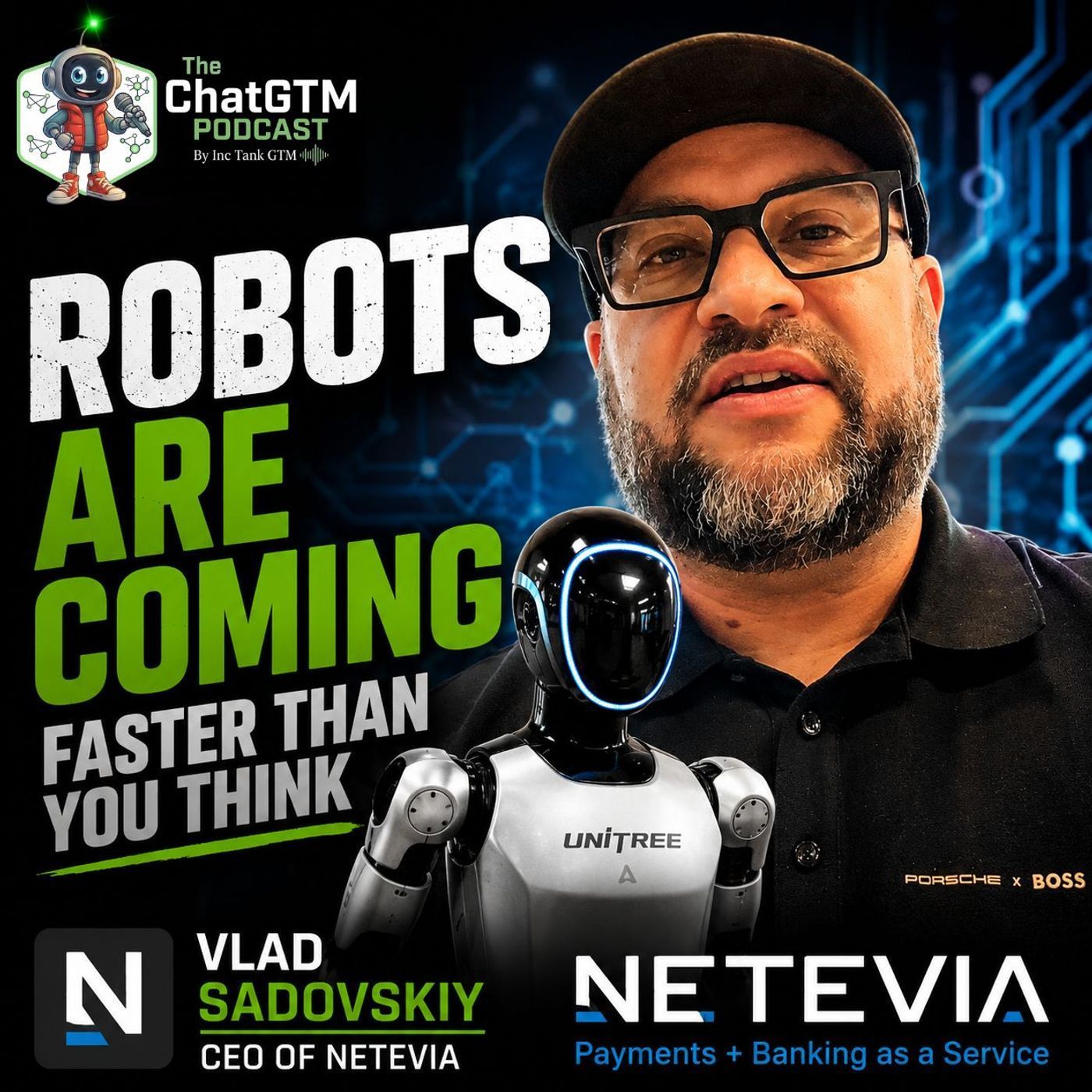
A robot in a payments booth creates a problem for the person holding the brochure. It is difficult to compete with something that moves, waves and makes visitors question whether the video they saw online was real. For Vlad Sadovskiy, that attention is part of the experiment.
The Netevia executive tells Michael Beck and Chad Horn that his trade-show robots prompted reactions ranging from affection to outright resistance. Some visitors wanted to hug them. Others wanted no part of the future they seemed to represent. Either response gave the booth a conversation that a conventional product display might never have started.
Sadovskiy sees those encounters as an introduction to technology that people may eventually meet in ordinary business settings. He is enthusiastic about where robotics could go, while also acknowledging that the machines he is demonstrating have limitations. The distinction between a compelling demonstration and a dependable operating tool runs through the conversation.
Curiosity comes with practical details
Moving a robot into a public event is not simply a matter of charging its battery. Sadovskiy discusses permits and insurance, including the difficulty of explaining a new category of activity to insurers. Those unglamorous details belong in the same conversation as the technology's capabilities.
For a restaurant operator considering any unfamiliar tool, the useful lesson is to widen the evaluation. A demonstration can show that an action is possible. Daily use also depends on the setting, the people nearby, the support available and what happens when the action fails. A crowded service environment is a demanding place to discover that the demonstration left something out.
Sadovskiy imagines robots participating in payments, including a future device accepting a transaction through embedded hardware. He presents this as a direction of travel. It should be read as his view of a possible use case, rather than a promise that a complete restaurant-ready system is available today.
That leaves operators with a sensible way to engage: stay curious, ask to see the actual task and require a clear explanation of the conditions under which it works. Interest in a new technology does not have to become an immediate purchasing decision.
Trust still needs a person somewhere
The discussion of digital financial services offers a quieter example of adoption. Sadovskiy describes routine activities such as checking a balance or accessing a card through an app, while noting that some customers remain more comfortable when a real representative helps them get started.
His explanation of Netevia's approach includes a network of people who can introduce merchants to the service. That human connection helps make an unfamiliar digital arrangement easier to understand. The product may be accessed on a screen, but the decision to trust it can still involve a conversation.
There is a useful parallel for hospitality technology. An operator who hesitates may need a clearer understanding of who will answer a question after installation, rather than another feature demonstration. A vendor can make that concrete by explaining implementation, support and the responsibilities that remain with the business.
For anyone bringing a new tool into a team, it is worth asking what reassurance is missing. Employees may want to know how their work changes. Managers may need to understand the exception process. Guests may simply need an obvious way to reach a person. Adoption depends on making the next step understandable for each of them.
Start with an action the business already needs
When the conversation returns to what restaurants can do now, Sadovskiy points toward ordinary work: managing menu information across ordering channels, handling incoming calls and learning more about customer activity. These are less theatrical than a humanoid at a conference, but they offer clearer questions for a pilot.
Take the menu example. The useful outcome is an accurate change in the intended channels, with someone able to confirm it happened. An operator evaluating an AI-assisted tool can compare that outcome with the existing process: how long it takes, where errors arise and how an incorrect update is reversed. The business task gives the demonstration a standard to meet.
Sadovskiy wants owners to explore AI as something that can help complete work, rather than only retrieve information. That ambition still calls for judgment about permissions and oversight. A system suggesting a change and a system making it are different operating arrangements. Deciding who approves which actions is part of putting the tool to work.
His own career, including his account of earning money playing chess after immigrating to the United States, informs his appetite for learning and calculated risk. He returns to the ability to recover and adapt when something fails. For a small business, a bounded experiment offers room to practice that habit: choose a recurring task, establish a baseline, test the tool and decide what the evidence supports. The robot may get everyone to stop at the booth. The work after the demonstration determines whether they should stay.