The work before the decision
A manager needs to make a decision, but first there are reports to run, numbers to compare and information to find. The administrative sequence can become so familiar that everyone forgets why it exists. The real job starts after the information has been assembled.
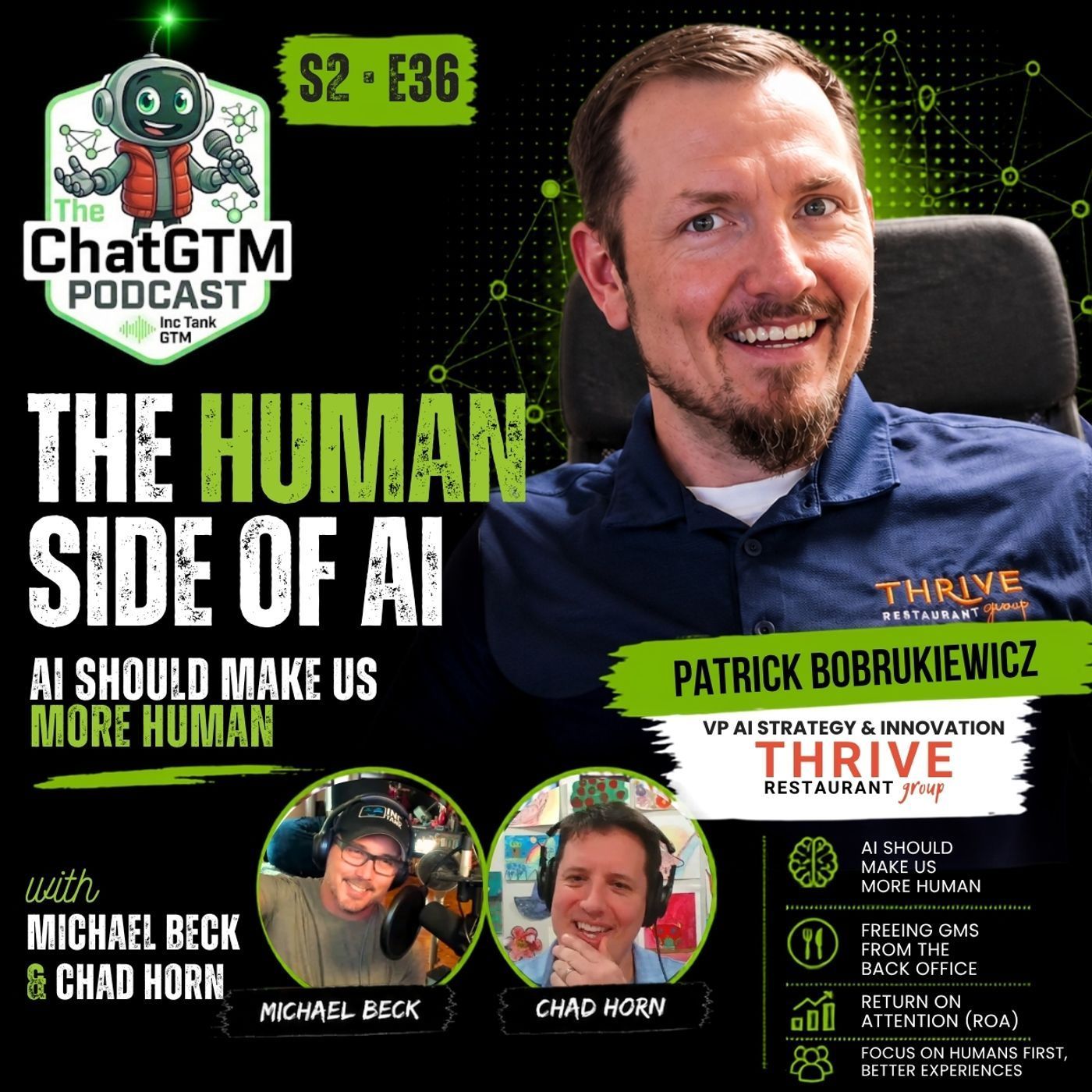
Patrick Bobrukiewicz returns to that gap in his ChatGTM conversation with Michael Beck and Chad Horn. At Thrive Restaurant Group, his approach to AI begins with the people doing the work. He asks what a tool could prepare for them so they can spend more of their attention on employees, guests and the decisions that require their judgment.
The hosts and Bobrukiewicz use an Iron Man analogy: the technology is most useful when it strengthens the person inside it. For a restaurant team, that idea becomes concrete when a manager can investigate an exception without first disappearing into the office to assemble a stack of reports.
A useful answer begins with shared definitions
Bobrukiewicz is interested in connecting structured information, such as operating metrics, with less structured context. He sees an opportunity to ask follow-up questions about what might explain a result, rather than only displaying that result on a dashboard. That opportunity depends on the system understanding the business it is meant to support.
His example is deceptively small: one person says store, another says unit and another says restaurant. The language varies, but the underlying query may need the same location identifier. A tool that cannot handle those differences will make users adapt themselves to the system before they can get useful help.
He also wants the experience to reflect how a brand communicates. The terms used by leadership and restaurant teams help determine whether the tool feels familiar. That does not establish the accuracy of an answer on its own, but it removes an avoidable barrier to understanding it.
A practical first step for an operator is to document a short set of frequently asked questions and the definitions behind them. Which sales measure is intended? Which period should be compared? What does the team call a location? Agreeing on those details creates a better foundation for AI assistance and improves ordinary reporting at the same time.
A recommendation still needs judgment
The conversation includes an imagined future in which a system brings several operating signals together and suggests an action to a manager. Bobrukiewicz explicitly distinguishes that scenario from a deployed capability. He uses it to explore what might become possible, not to claim that every part of the example is already running at Thrive.
He also raises the difference between correlation and causation. Information that moves together can be worth investigating without proving why it happened. That distinction becomes especially important when recommendations affect people. A metric can suggest a question for a manager; it should not quietly become a complete account of an employee or a team relationship.
For a pilot, the strongest starting point may be surfacing an anomaly and the evidence behind it. Let the manager examine the relevant information, bring in context the system does not have and decide what to do. The tool's value can then be assessed through the quality and speed of that work.
An operator can define the boundaries before launch: what the system may read, what it may recommend, which actions require review and how a mistaken answer is corrected. Those decisions are part of designing the working relationship between the person and the technology.
Use the recovered time for hospitality
Saving administrative time leaves an important question unanswered: what happens to the time? Bobrukiewicz points toward engagement with staff, guests and the surrounding community. The intended benefit is more room to do the human work that a restaurant depends on.
His discussion of guest recognition follows the same principle. Different guests value different experiences. An offer that ignores someone's past choices can feel irrelevant, while an appropriate personal interaction may be more meaningful than another discount. He describes testing different ways of encouraging a relationship rather than assuming every guest responds to the same reward.
Those examples suggest a more useful evaluation of an AI project than counting generated answers. Does the manager spend less time assembling information? Can employees get help more readily? Are recommendations understandable enough to be challenged? Is the team using any recovered capacity in a way that fits the brand's priorities?
Bobrukiewicz's challenge to technology partners is to ask what matters to an operator's people and culture before presenting the system as the center of everything. Start with the work of the restaurant and the guests it serves. Then decide what the technology should carry, so the general manager can keep their attention where it is most needed.