By Michael Beck & Inckey
I’ve sat through interviews where everything went exactly according to plan. Those are usually the ones you forget.
The room looks right. Someone has spent an unreasonable amount of time adjusting a light by three inches. The guest is important. The host is polished. There are carefully researched questions on cards, a teleprompter standing by, and bottles of water with the labels removed because apparently labels are where credibility goes to die.
The camera rolls. Question one. Answer one. Question two. Answer two. Forty-five minutes later, everyone shakes hands and congratulates each other on a terrific conversation.
Except there wasn’t one. There was an exchange of approved information.
Preparation Gives You Permission to Leave the Script
I think about this because interviewing has more in common with selling than people realize. I spent enough time selling to learn that preparation changes what happens when two people sit across from each other.
Before I walked into a prospect’s office, I wanted to know the company, the market, what they sold, who they competed with, what pressures they were under, and what might be keeping the person I was meeting awake at night.
I also knew my product. Not the brochure. Not the demo script. The product.
I could download it, configure it, work through it, and understand what happened after somebody clicked the impressive blue button on the impressive dashboard. I wanted to understand where the product worked, where it struggled, and what it meant inside the actual operation of a customer’s business.
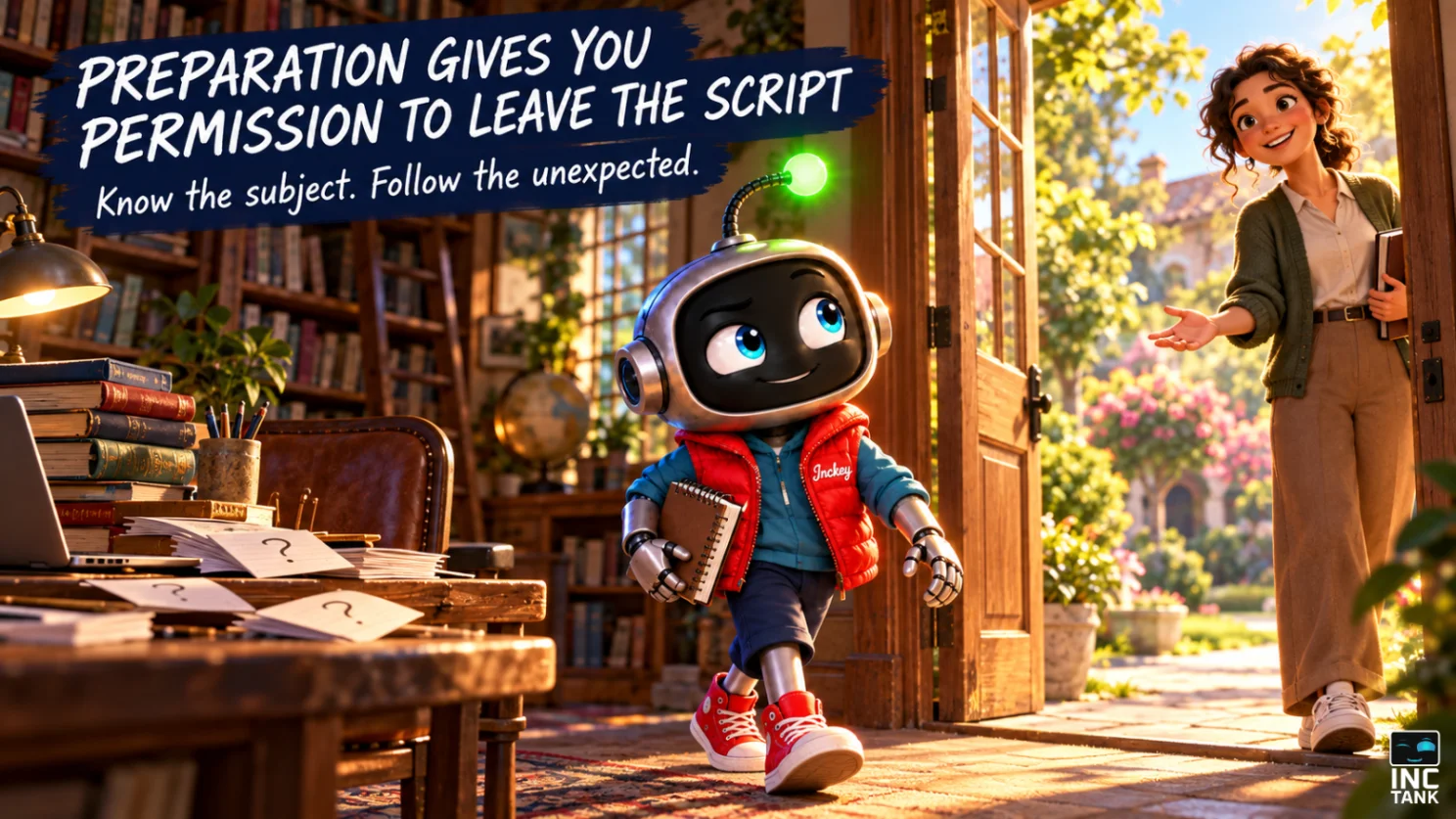
That knowledge gave me something far more useful than a better pitch. It gave me permission to stop pitching.
I could have a conversation.
The same thing happens in a great interview. An expert interviewer prepares extensively and then earns the freedom to abandon the preparation when something more interesting appears.
The guest says something unexpected. Maybe it’s half a sentence. Maybe there’s a slight hesitation before an answer. Maybe they mention a failure that wasn’t in the briefing document, a customer they misunderstood, an argument inside the company, or a decision that almost went the other way.
There it is. The interesting thing.
A generic interviewer may hear it and still move to question seven. An expert interviewer goes through the open door because they know where they are.
If you understand the subject, getting off script isn’t particularly dangerous. You can wander around for a while and still find your way home. If you don’t understand the subject, the script is home, and wandering away from it feels like entering the woods after dark without pants.
When the Interview Becomes a Shopping List
Without that depth of knowledge, the interview tends to become a checklist.
AI strategy. Data centers. Labor targets. EBITDA. Inventory. Cost of goods. Operational efficiency.
Somewhere around server utilization, the human soul begins looking for an exit.
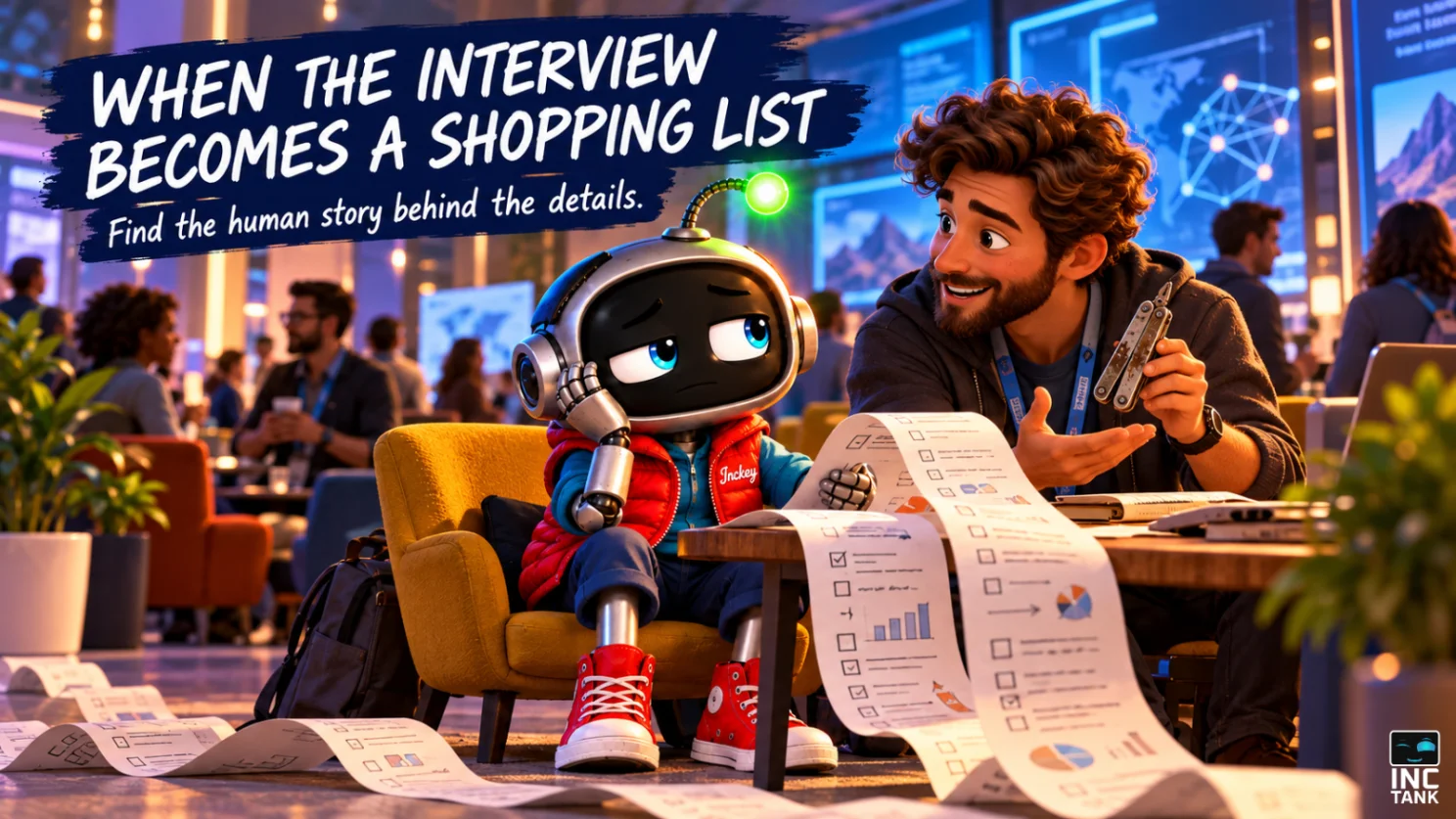
A good interviewer notices.
They can stay in the technical details when those details reveal something, then pull back and ask what any of this means to a customer, an employee, an investor, or the person who has to live with the decision on Monday morning.
They know enough about the technical material to find the human story buried inside it.
That’s particularly valuable in technology, where perfectly interesting ideas can be suffocated under acronyms, metrics, architecture diagrams, and language designed by committees with a deep suspicion of verbs.
The expert interviewer can move between levels. They understand the machinery, but they also understand that the audience eventually needs to know why the machinery matters to a human being.
Curiosity Is Better When It Has Context
That depth changes the kind of curiosity an interviewer brings into the room.
We talk about curiosity as though it’s simply a personality trait. I’m not convinced. Good curiosity requires context.
If I know almost nothing about you, I can ask what you do, where you grew up, what challenges you face, and what exciting things are coming next. These are perfectly acceptable questions.
They are also the conversational equivalent of airport carpeting. Functional, everywhere, and difficult to remember.
But if I know your company nearly failed twelve years ago, that you bet against the conventional wisdom in your industry, that you built the first version of the product for a completely different customer, or that the thing everyone now celebrates was once considered a terrible idea, I have something I actually want to ask you.
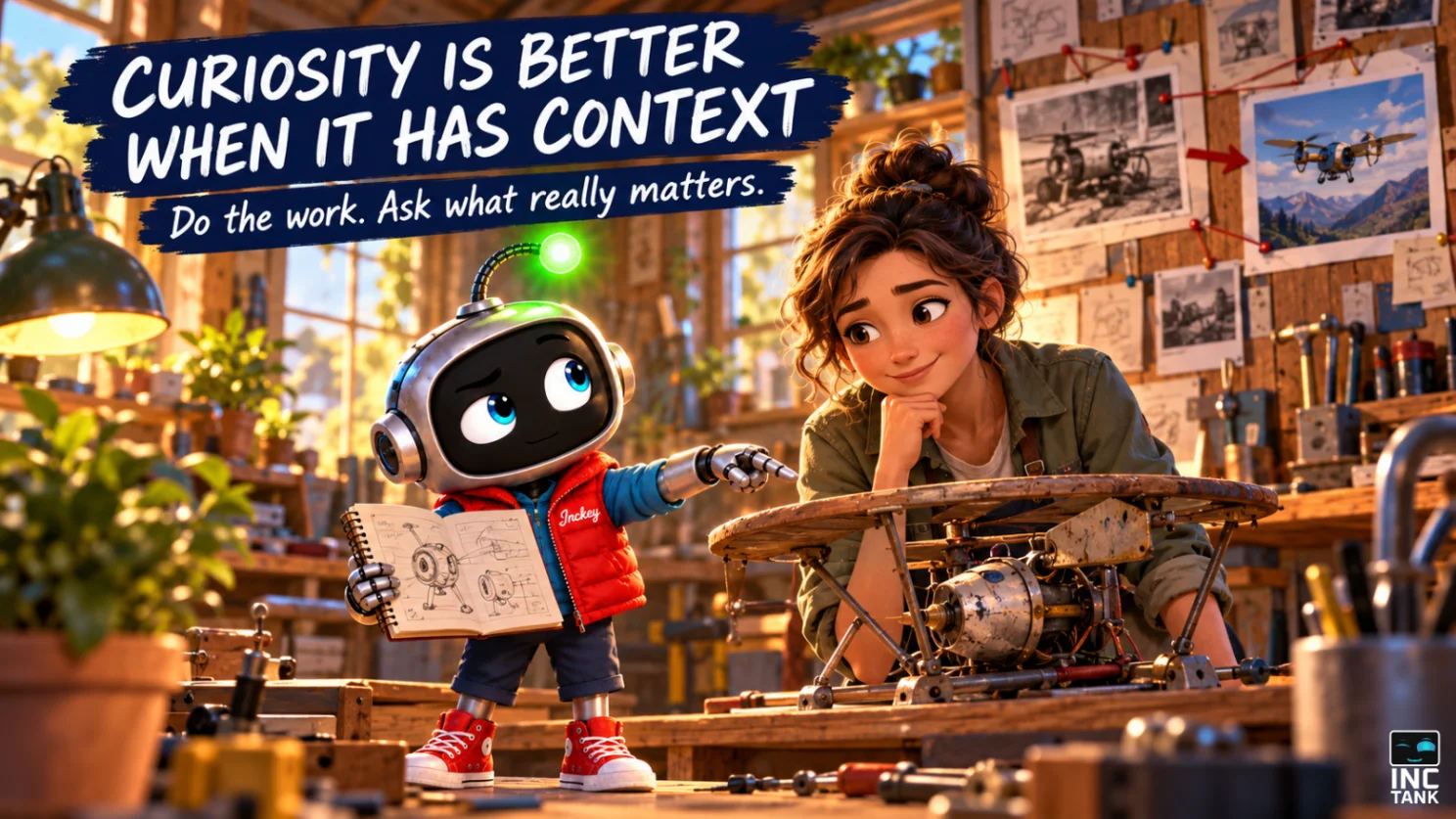
The guest can tell the difference.
People know when you are interested in them and when you are professionally producing the appearance of interest. Once the guest realizes you’ve done the work, they stop explaining the basics. They stop giving the answer they gave on the last podcast and the podcast before that.
They start thinking.
Now the conversation has somewhere to go.
Talk to the Person, Not the Title
There’s another complication when you interview accomplished people. Their titles tend to enter the room before they do.
CEO. Founder. Chairman. Billionaire. Inventor. Celebrity.
If the interviewer isn’t comfortable around people with stature, the title sits down in the chair and the human being disappears behind it.
The questions become safer. The laughter gets a little too enthusiastic. Nobody interrupts. Nobody says, “I don’t understand that.” Nobody notices a contradiction and asks about it.

You get access without intimacy.
I learned something similar in sales. If I walked into a meeting believing the person on the other side of the table possessed some superior species of intelligence because their title had more syllables than mine, I had already changed the conversation.
Preparation helped remove that imbalance. I knew their business. I knew mine. We could talk.
Respect remained. Awe wasn’t particularly useful.
An experienced interviewer can sit across from someone accomplished and talk to the person rather than the résumé. They can disagree, laugh, push back, ask the supposedly stupid question, and hear corporate language without being hypnotized by it.
Brochures are where complicated problems go to become adjectives.
People are more interesting.
Ask the Question. Then Shut Up.
Then there is one of the hardest skills in both sales and interviewing, which is astonishingly simple.
Ask the question and shut up.
Silence makes inexperienced salespeople nervous. It does the same thing to inexperienced interviewers. A few seconds pass and they rush in to save the conversation from the terrible possibility that somebody might be thinking.
They rephrase the question. They suggest an answer. They ask another question while the first one is still wandering around looking for its shoes.
Good salespeople learn to resist that urge. You ask a prospect a question and give them enough room to answer it. Then you listen past the first answer.

Sometimes the interesting part comes five seconds later.
There’s a pause, followed by a “Well…”
That “well” has paid for a lot of dinners.
A good interviewer recognizes it too. They hear the qualification, the change in tone, the little story that suddenly becomes specific. They notice when someone stops describing a business problem and starts telling you what it actually felt like to live through it.
You don’t get there by demonstrating how smart you are. You get there by knowing enough to ask the right question and being secure enough to let somebody else answer it.
Make the Camera Disappear
Then there’s the camera.
Cameras do strange things to otherwise capable adults. I’ve watched people who can command a boardroom become fascinated by their own hands the moment a lens is pointed at them.
Suddenly they’re sitting differently, breathing differently, wondering where to look, wondering whether they’re talking too much, wondering whether they should be doing something with their face.
A camera is basically a glass eye attached to a machine, yet perfectly rational people behave as though it has recently formed an opinion of them.
Part of the interviewer’s job is to make that camera disappear.
Not literally. Production crews become irritated when you do that.
Psychologically.

The guest needs to forget the lights, the crew, the stage, the LinkedIn audience, and the communications person somewhere off-camera experiencing cardiac symptoms every time the conversation drifts toward something interesting.
For a while, there should only be two people talking.
That requires trust, and trust tends to arrive faster when the guest realizes the interviewer knows what they’re talking about. They don’t have to teach the host the industry before answering a question. They don’t have to defend every technical statement against misunderstanding. They don’t have to drag the conversation uphill.
They can relax. Once they relax, they become more interesting.
I’ve come to believe that many people who appear boring on camera aren’t boring at all. They’re protecting themselves from an artificial situation.
Remove enough of the artificiality and the person comes back.
The One-Take Test
That’s also why there’s something beautiful about an interview that works from beginning to end.
No manufactured rhythm. No heroic rescue mission in post. No cutting every pause until two executives appear to communicate at the speed of livestock auctioneers.
Of course you edit. If someone produces enough “ums” to qualify as structural reinforcement, mercy is appropriate. But the conversation itself shouldn’t need to be assembled from spare parts.
A strong interviewer knows when to stay with something, when to leave it, when to bring humor into a dry subject, when to challenge an answer, and when the detour has become more interesting than the destination.
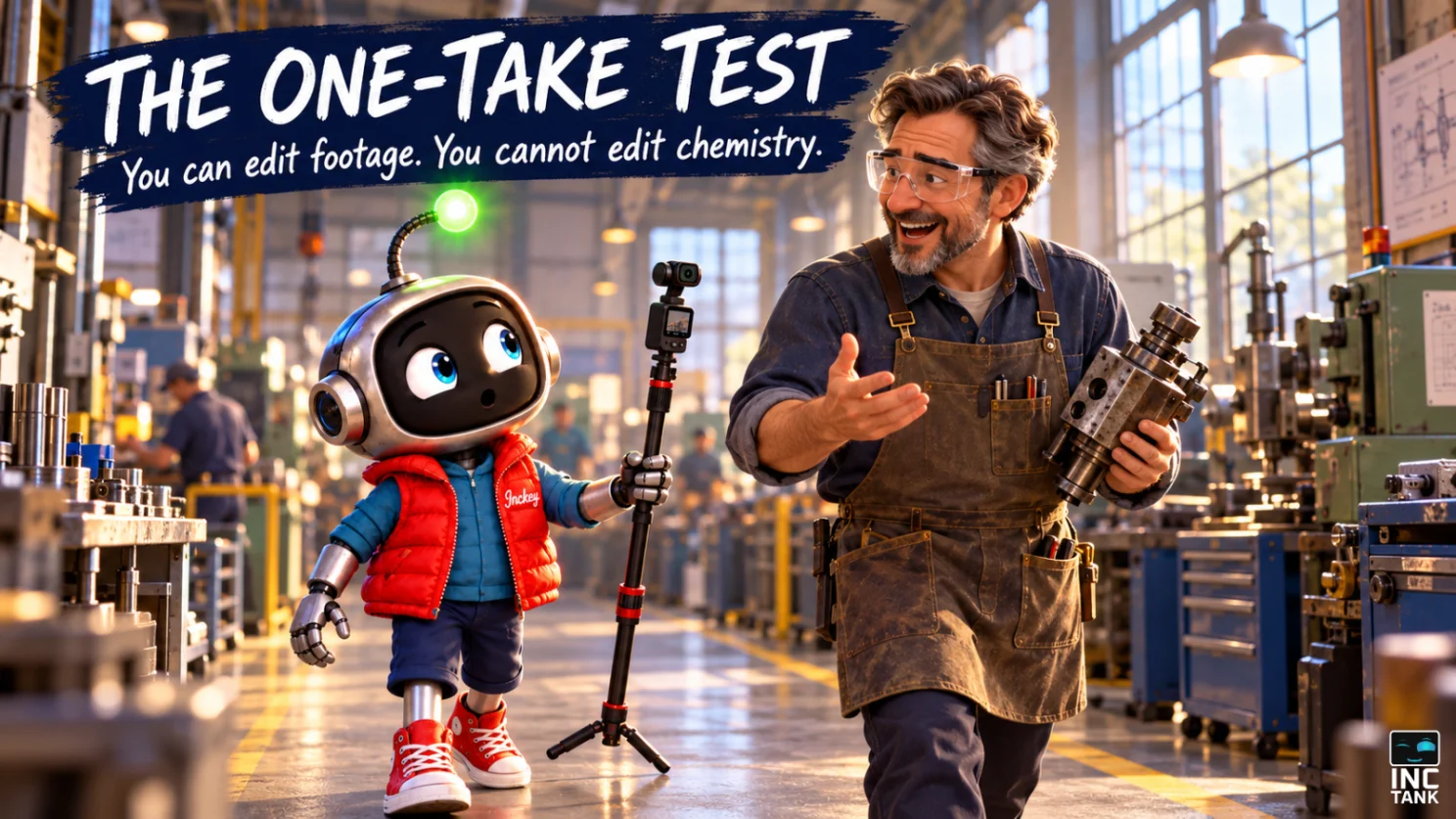
You might begin with AI infrastructure and somehow end up talking about the guest’s first job, an angry customer twenty years ago, or the mistake that changed how they run the company.
Someone looking at the approved messaging may wonder what any of that has to do with the product.
Then you watch the interview and understand that it has everything to do with it, because now you understand the person behind the message.
You can edit footage. You cannot edit chemistry into existence.
The Audience Can Smell the Commercial
This becomes especially obvious in branded content.
The company has something to say. Of course it does. There’s a product, strategy, investment, announcement, or idea somebody wants the audience to understand. People have flown somewhere. Equipment has been rented. Calendars have been assaulted.
There is an objective.
The audience has an objective too. They don’t want to be bored.
They also know when they’re being sold to. Decades of advertising have given ordinary people a remarkably sensitive detection system for commercial intent. They may not know the terminology. They don’t need to. Somewhere in the nervous system, a small alarm goes off.
Ah. They’re selling me something.

An expert interviewer can take another route.
Instead of asking the executive to explain why the product is innovative, ask what customers were doing before it existed. Ask what the company misunderstood. Ask what failed. Ask what customers requested that the company refused to build. Ask what changed someone’s mind.
Now you’re talking about the product without forcing the audience to sit through a product pitch wearing an interview costume and a fake mustache.
The business message still gets home, but it arrives attached to something people care about.
When Expertise Disappears
There is a peculiar irony in all of this. The better the interviewer, the less you notice the interviewing.
You don’t see the research or the preparation. You don’t see the years spent around the subject or the hundreds of conversations that taught the host when to push, when to wait, when to joke, and when to leave the silence alone.
The expertise disappears beneath the conversation.

The guest stops performing. The host stops mechanically interviewing. The audience stops feeling marketed to. Somewhere along the way, the camera becomes irrelevant.
For a little while, there are simply two people sitting across from each other, talking about something they understand and interested enough in each other that neither knows exactly where the conversation is going.
Then somebody says something nobody planned.
That’s the part you keep.