By: Chad Horn
We’re about to be full swing into the fall trade show season. For some of the industry tech shows in the rear view and for some coming up, it seems like attendance is a bit down. And this at a time when people are hungrier than ever for in-person connection as a sanity-preserving counter to the proliferation of AI-fueled noise and fakeness.
I had previously chalked it up to new event competition, and I’m sure that plays a role. Lately, I’ve heard from enough restaurant IT leaders, including ones that are on truly on top of their game, that something else more sinister may be playing a bigger role.
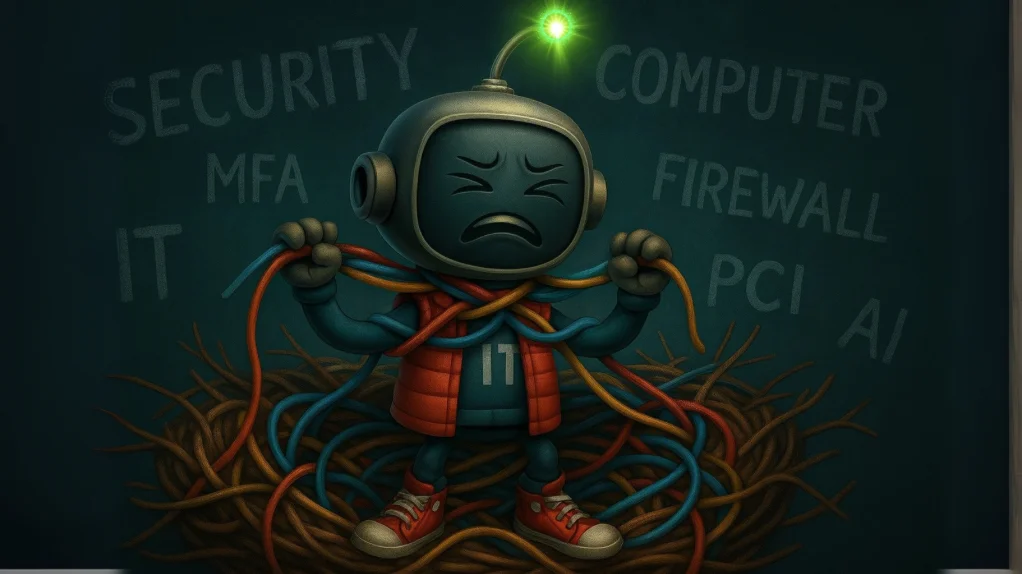
Step into the shoes of a restaurant IT leader for a week, and you’ll understand the burnout crisis impacting this particular role. One week, you’re juggling a chain-wide network slowdown that nobody can quite trace. The next, a third-party delivery update ripples across hundreds of locations and takes POS integrations down in waves. By Monday morning, your inbox is stacked with vendor escalations, regional managers demanding fixes, and a half-dozen platforms pointing fingers at each other instead of playing nicely together.
Somewhere in between, you’re supposed to be researching and planning the brand’s digital future. Except you never get there, because the fires don’t stop.
This is the state of restaurant IT. Brilliant leaders stuck in perpetual triage mode. And when someone does find breathing room to do real strategy? It’s such a rarity that the industry notices. In an adjacent vertical like retail, strategic IT leadership is already baked into the org chart.
It’s no wonder fewer IT heads have time to show up at long-standing industry events. They’re not disengaged; they’re buried.
So, what’s driving this grind?
The Foundation That Keeps Crumbling
Almost every bad tech story eventually traces back to shaky infrastructure. 24x7 monitoring on paper, but you still find yourself consistently opening tickets before your MSP acts. SD-WAN is everywhere, yet cellular failover that was never exercised fails the moment the primary drops. A payments outage that doesn’t just hit one dining room, but wipes out an entire region’s Friday night revenue. And every time, the same cycle: finger-pointing between vendors, operators escalating to the C-suite, and IT caught in the middle with no clean fix.
At this level, leaders aren’t losing sleep over whether the latest dashboard refresh looks modern enough. They’re losing sleep over whether the core network can withstand a surge in mobile orders or an update from a third-party delivery provider without forcing a chain-wide war room. That’s the trap: foundation instability steals all the attention, leaving little room for advancing digital experiences, loyalty innovation, or data strategy.
The solution isn’t glamorous, but it’s transformational: disciplined procurement, network partners who can scale with the business, clear processes, and an organizational refusal to accept “good enough” at the very layer everything else depends on.
Though we have a predilection for cool tech at Inc Tank, we’ve intentionally built relationships in this foundational camp so we can offer any technical guidance in a prioritized sequence.
Death by a Thousand Vendors
Ask any restaurant IT leader to sketch their tech stack and watch the pen run out of ink. POS at the core, scheduling bolted on, loyalty layered in, delivery integrations stacked at the edges, and payments woven through it all. Each system chosen at a different time, often by different decision-makers, with little thought to how they’d connect.
Each new vendor was supposed to solve a problem. Instead, it multiplied them. IT teams become human duct tape, constantly bridging gaps between systems that were never designed to communicate well.
Industry thought leaders have been waving the red flag here for years: vendor proliferation without interoperability is a treadmill that only speeds up. The way off is streamlining procurement and prioritizing tools with native integrations and webhooks, not just the ones with the flashiest sales pitch.
A Culture That Keeps IT Small
The real heartbreak isn’t just the outages or the vendor headaches. It’s the way IT is still culturally boxed in. Too many restaurant organizations treat IT like the “fix-it” department. Reset the router. Call the vendor. Put out the fire.
Meanwhile, in retail, it’s normal to see Chief Data Officers, Chief Innovation Officers, and now even Chief AI Officers, driving the agenda at the executive level. In restaurants? Adding a C-level tech beyond the CTO or CIO role is still headline-worthy.
That cultural gap has consequences. IT leaders who could be shaping guest experience, loyalty ecosystems, and data-driven growth are instead fielding escalations about handheld devices that won’t update, sitting in endless vendor blame loops, and manually untangling integration failures just to keep operations afloat.
The Way Out
Burnout doesn’t happen because IT leaders aren’t capable. It happens because they’re handcuffed. The escape hatch is clear:
- Fix the foundation so the network doesn’t crash every weekend.
- Streamline the vendor stack so interoperability is the rule, not the exception.
- Elevate IT leadership so strategy becomes part of the realistic job description, not an afterthought.
Free IT from firefighting, and restaurants might actually leapfrog other industries in places where guest experience and digital ordering converge.
Because here’s the truth: the same leaders who are putting out fires today could be building the future tomorrow. They just need the time, the trust, and the tools to do it.