By: Chad Horn
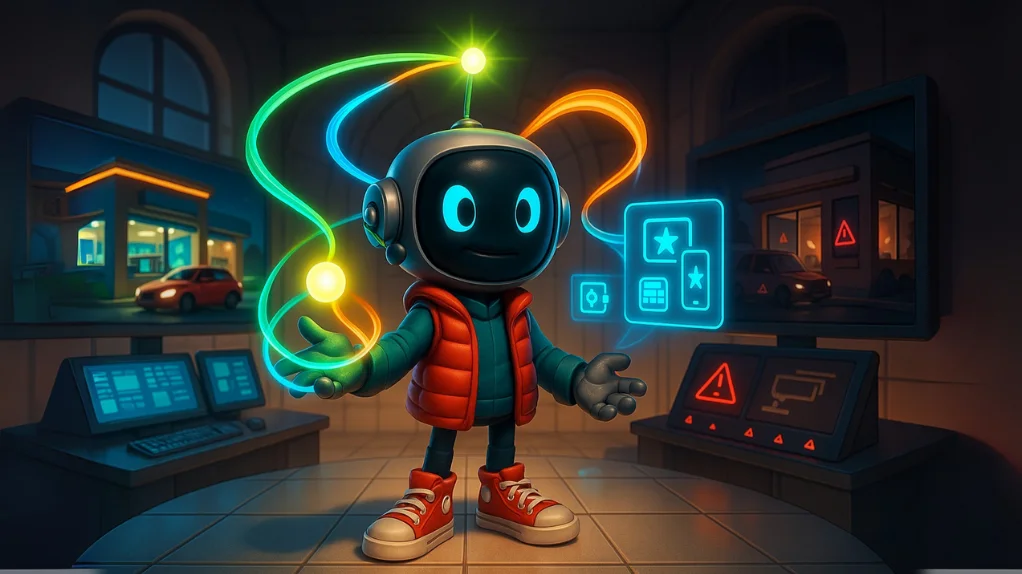
The lunch rush hits. Orders pile up on screens. Then one location’s network drops. No payments. No loyalty scans. Staff scramble with the best available backup plans while cars crawl through the drive-thru. The same brand across town is running smoothly. Guests are left wondering why one store feels a generation behind.
Meanwhile, far away at a restaurant technology conference, brand executives lean in as they soak in the promises of AI-driven transformation.
AI is indeed raising the stakes. But before it can deliver on its promise, it’s also forcing operators to face something more basic: the fact that infrastructure, reliability, and data unification aren’t optional anymore. They are prerequisites for unlocking AI’s power.
And another shift is happening too: the one from guesswork to precision. The next competitive edge won’t come from loyalty apps in isolation or menu optimization alone. It will come from how brands collect, unify, and act on their data. Data has always mattered, but AI has turned it into the deciding factor between leaders and laggards.
At recent fall tradeshows, the urgency was clear: brands are racing to realign priorities, knowing that without a solid data architecture, they’ll be left behind while competitors accelerate with AI.
The Convergence of Data Streams
Picture a drive-thru headset capturing every word, a camera logging car counts and dwell time, and a POS system firing off transactions in real time. On their own, each tells part of the story. Together, they create a living, breathing picture of restaurant operations and guest behavior.
Voice data reduces ordering errors in-store, on the phone, and at the drive-thru. Vision data tracks kitchen flow, portion control, and speed of service. Traditional data captures transactions, labor, and loyalty signals.
Each stream is valuable in isolation, but the real breakthroughs come when they converge under a unified data architecture. That’s when AI begins surfacing patterns, predicting outcomes, and automating next steps.
One operator we interviewed described how pairing vision AI with POS data improved both speed of service and loss prevention. It wasn’t just an incremental gain. It was proof that convergence creates results no single system could achieve alone.
Already, brands are using AI to analyze drive-thru audio and identify training needs. Now imagine those insights automatically triggering personalized loyalty offers. Or vision AI data feeding into POS systems, optimizing throughput while also elevating guest sentiment.
The power multiplies at the point of convergence, and this is only the beginning.
From Insight to Automated Action
The first wave of analytics gave operators dashboards, reports, and the occasional actionable insight. Useful, yes, but usually backward-looking and slow.
The next wave doesn’t just report. It responds. It takes the action for you that you might have taken if you had the time to read the in-the-moment analysis and do it yourself.
When voice, vision, and transactional data streams are unified, AI doesn’t stop at flagging risks or opportunities. It acts in real time.
- Smart staffing: Scheduling AI taps into POS, vision, and even weather data to reassign shifts on the fly, matching labor to actual demand.
- Predictive demand shaping: A sudden surge of cars at the drive-thru? Vision AI spots it and models respond immediately, streamlining order flows and adjusting promotions to balance throughput with guest experience.
- Personalized service at scale: A guest’s loyalty history fuses with live order data and sentiment analysis, triggering tailored upsell prompts in the moment, either to staff or directly at the ordering interface.
The leap from insight to automated action is the arena where competitive advantage will be forged or lost. Brands that enable AI to act seamlessly will unlock speed, precision, and personalization at a level the industry has never seen. Those that can’t will remain stuck at the dashboard stage, watching events unfold instead of shaping them.
But this promise collapses without instant, reliable communication between systems. A garbled AI response forces a guest to repeat their order. A personalized offer arrives too late - after the guest has already left. A kiosk freezes mid-shift and staff lose trust, sending more guests back to the counter. These aren’t just glitches. They are trust killers, and both guests and employees remember them.
Infrastructure: The Hidden Linchpin
One connectivity executive told us bluntly: many brands accept that 10% of their stores are offline at any given time.
For a line item in a tech report, that might sound manageable. For a team member during the dinner rush, it’s chaos. It means explaining to guests why their payment won’t go through. It means telling a loyalty member their reward can’t be redeemed. It means watching a line of cars leave frustrated.
Innovation without infrastructure is like building a skyscraper on sand. The higher you build, the faster it crumbles.
Without strong IT foundations, the vision of unified, AI-powered operations falls apart. Voice and vision systems don’t just need to connect with the whole; they demand consistent bandwidth and speed. Traditional data doesn’t just need consolidation; it must be accessible in real time. Delivering that requires:
- High-bandwidth, low-latency networks to ensure responsiveness.
- Redundant, flexible telco relationships to avoid single points of failure.
- Standardized infrastructure across locations so scaling is seamless.
- Cloud-edge balance so critical tasks run locally when needed while insights scale centrally.
Too often, IT leaders are stuck in firefighting mode because of brittle infrastructure. It’s not the flashiest part of the tech stack, but it’s the part that decides whether innovation holds up under pressure. The operators pulling ahead are the ones who solved infrastructure first.
Innovation and infrastructure are inseparable. Without the latter, the former never makes it past the pilot phase.
The Stakes Ahead
The contrast will be stark. One guest will pull up to the drive-thru, the brand’s AI will greet them seamlessly, recognize the order flawlessly, and suggest a personalized upsell, all of it a frictionless experience. Across the street, another guest will encounter frozen screens and staff scrambling to keep up with a core system down. The guest won’t chalk it up to “infrastructure.” They’ll just choose where to go tomorrow.
Restaurants that invest now will unify their data, harness AI, and operate at a velocity competitors can’t match. They’ll anticipate challenges before they surface and automate actions at the speed of guest expectations.
Those that don’t will be left with fragmented systems, sluggish automation, and pilots that shine in the lab but collapse in the field.
The crunch is here. The only question is whether your infrastructure will carry the weight of AI or crumble under it.