By: Marcus Wasdin
I’ve spent my career on both sides of the table. I’ve run a P&L as an operator. I’ve run one as a solution provider. I currently sit on the board of a voice AI company in the drive-thru space, I launched a large restaurant technology company’s first customer-facing AI product, and I’ve spent years deploying customer-facing technology in live operating environments.
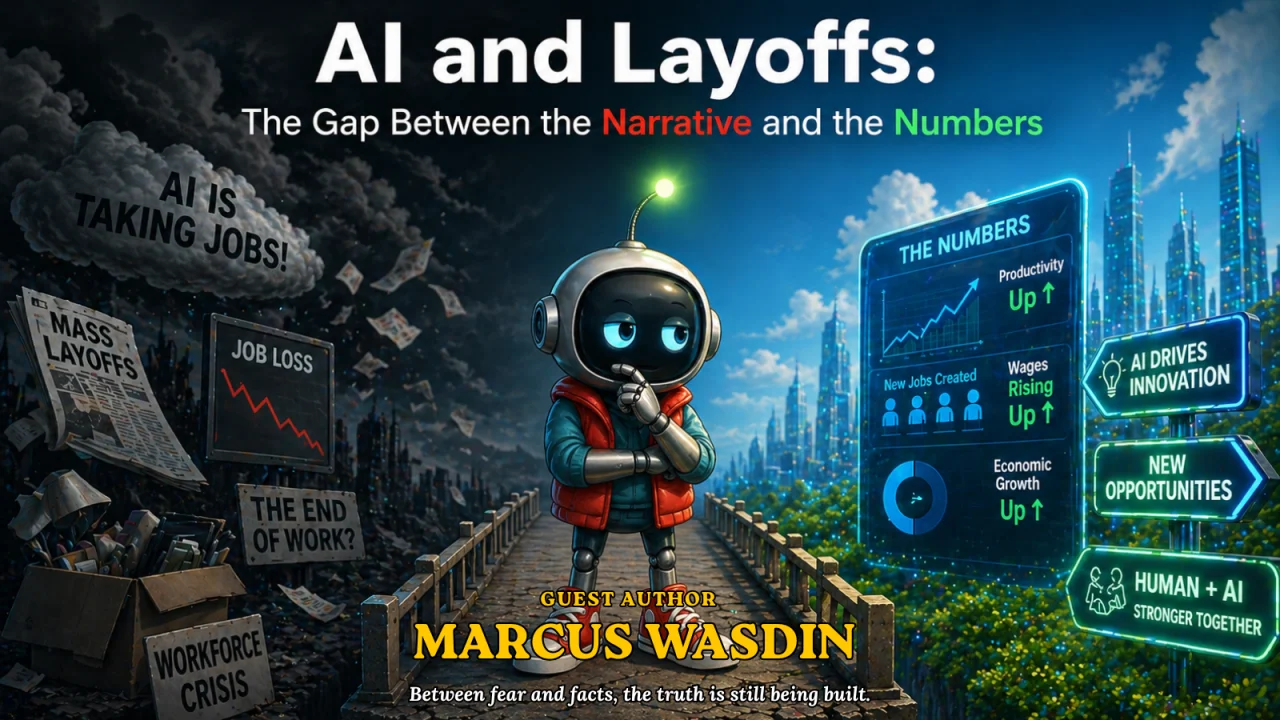
So, when I read another press release explaining that a 10,000-person layoff is happening because “AI is making us more efficient,” I find myself asking some questions that I don’t think are getting enough attention.
Let me be clear up front. AI is creating real efficiencies. I see them every week. It is taking cost out, improving accuracy, and freeing people up to do higher-value work. That trend is genuine and it’s accelerating. But I suspect the efficiencies being claimed in many layoff announcements are not the same efficiencies showing up in the P&L. Those can be two very different numbers, and the gap between them is worth examining.
In Q1 2026 alone, 78,557 tech workers were laid off, with nearly 48% of those cuts publicly attributed to AI-driven efficiency. Even Sam Altman, who has every financial incentive to promote AI as a productivity engine, recently acknowledged that “there’s some AI washing where people are blaming AI for layoffs that they would otherwise do.” When the CEO of OpenAI is raising that flag, it seems worth taking seriously.
What Else Might Be Driving the Layoffs
I don’t think there’s a single explanation here. A few things appear to be happening at the same time and separating them matters.
- The 2021-2022 hiring binge is still being unwound. Tech companies went on a talent spree during the pandemic that, in retrospect, was detached from realistic demand forecasting. Unwinding that takes years, not quarters. An Oxford Economics study earlier this year concluded most layoffs are tied to “more traditional drivers” like over hiring and poor financial performance. For many companies, AI may be a convenient explanation for a correction that was going to happen regardless.
- Macro conditions are putting real pressure on margins. Higher capital costs, cautious consumers, and intensifying competition are squeezing businesses in ways that don’t make for great press releases. Framing a difficult operating environment as a strategic AI transformation is understandably more appealing than the alternative.
- The market tends to reward the AI story. There’s a reasonable argument that companies face an incentive to connect workforce reductions to AI efficiency rather than to business performance. That doesn’t mean every CEO is being disingenuous, but the incentive structure is worth acknowledging.
What Deployment Actually Looks Like on the Ground
Having deployed customer-facing AI in live operating environments, I can share that it’s a more deliberate process than the announcements tend to suggest. It’s capital-intensive. It requires clean accurate data and a solid data strategy. It requires serious integration work. It needs human oversight in production for an extended period before you can rely on it at scale. The gains are real, but they tend to compound gradually rather than arrive all at once.
In many cases, what I suspect is happening is more nuanced. AI is handling a portion of what certain roles did. The rest is being redistributed to remaining staff, managed differently or just plain eliminated. That’s still valuable progress. It just doesn’t quite look like the clean efficiency story being told to investors.
What I Actually Believe About AI and Work
- AI is more of a force multiplier than a replacement. The organizations I see doing this well aren’t cutting staff to fund AI deployment. They’re using AI to help existing staff do more of what people do best, which is judgment, relationships, and handling complexity. In the drive-thru space, for example, voice AI done well doesn’t eliminate the team member. It frees them to focus on speed, accuracy, and the guest experience. Throughput improves. Labor gets redeployed rather than eliminated.
- The loudest claims often come from the lightest deployments. In my experience, there’s an inverse relationship between how confidently a company talks about AI replacing workers and how much production AI they’ve actually deployed. Operators running this technology every day tend to be more measured, because they understand the real costs and the genuine complexity involved.
- Some of what’s being called AI-driven restructuring may really be a business performance story. When layoffs are misattributed to AI, markets can simultaneously overestimate near-term AI disruption and underestimate the real economic pressures at play. That’s a distortion that tends to correct itself over time.
Final Thoughts
The real AI transformation is genuinely underway. It’s creating efficiencies that will keep compounding. In time, the impact on how work gets organized will be substantial and some roles will meaningfully change.
But the leaders building that future are the ones deploying carefully, measuring honestly, and thinking about their people as the multiplier rather than the variable to eliminate. The technology is the lever. The people are still the engine.